

What to Do When a Building Becomes Structurally Unsafe
At a Glance:
- First 24 Hours: Immediate exclusion zones and utility isolation.
- Key Stakeholders: Liaison with Building Control (Section 77/78) and Fire Authorities.
- The Goal: Moving from “Emergency Stabilisation” to a “Permanent Repair Strategy.”
Immediate Priorities & Public Safety
When a building’s integrity is compromised—whether through fire, vehicle impact, or structural fatigue—the first priority is the CDM 2015 obligation to ensure site safety.
Establish Exclusion Zones: Secure the perimeter to protect the public and adjacent properties.
Utility Isolation: Immediate shut-off of gas, water, and electricity to prevent secondary hazards.
Visual Assessment: A “no-entry” survey by a Chartered Structural Engineer to determine the primary failure points.
Working with Local Authorities
Under the Building Act 1984 (Sections 77 & 78), local authorities have the power to act if a building is deemed a “Dangerous Structure.”
Section 77: A notice requiring the owner to make the building safe.
Section 78: Emergency action taken by the council if the danger is immediate. Our Role: We act as your technical liaison, providing the method statements and temporary works designs required to satisfy Building Control that the immediate risk is mitigated.
Stabilisation vs. Evacuation
The decision to evacuate a building or shore it up depends on the “Rate of Movement.” As a Principal Contractor with a surveying background, we provide:
Temporary Propping (Acrows & Slimshores): Immediate support to sagging structural members.
Facade Retention: Specifically for listed buildings where the exterior must be saved despite internal failure.
Monitoring: Installation of tell-tales or digital sensors to track ongoing movement.
The Route to Permanent Repair
Stabilisation is not the end of the project; it is the “Safety Pause.” Once the building is held in a static state, we begin the Forensic Investigation phase:
Opening up works to see the full extent of the damage.
Cost-benefit analysis of “Repair vs. Replace.”
Developing a Phased Repair Programme that satisfies insurers and conservation officers.
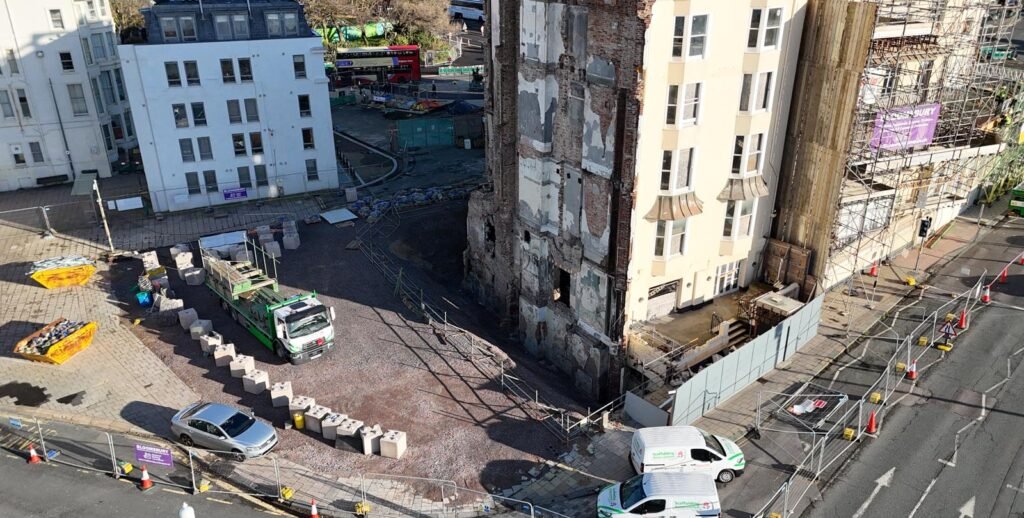
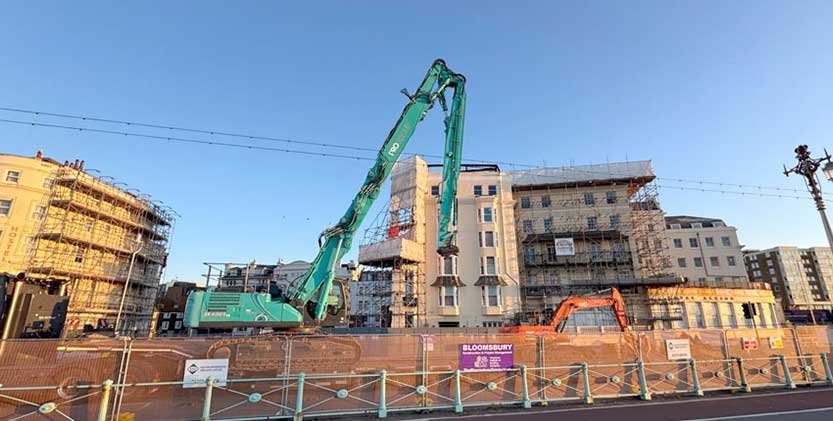
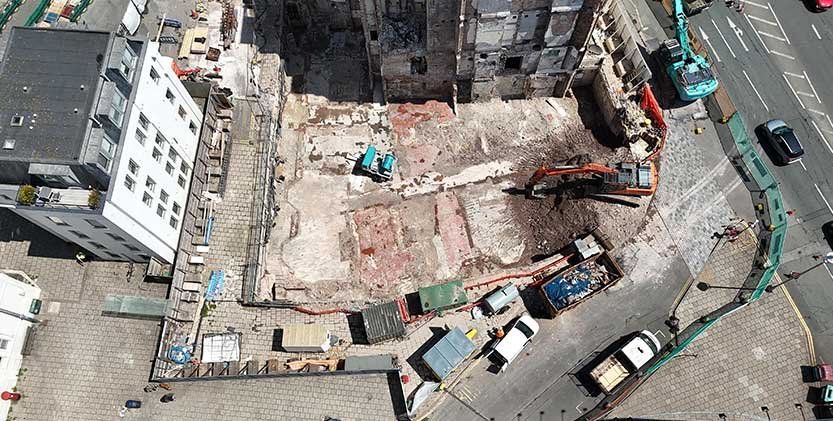
Experience in Action: Our team managed the high-stakes stabilisation of the Royal Albion Hotel following significant fire damage. This involved navigating complex listed building constraints while maintaining public safety in a high-traffic area.
View our Structural Stabilisation & Dangerous Structures Page
At The Bloomsbury Group, our CIOB membership is more than just a credential – it’s a reflection of our unwavering commitment to excellence in construction management. We take pride in upholding the high standards set by the CIOB and continuously strive to exceed them in every project we undertake.
Contact The Bloomsbury Group today to discover how our CIOB membership and commitment to professional excellence can benefit your next construction project.