

Royal Albion Hotel Project, Brighton
The Bloomsbury Group has been appointed to manage the rebuild and refurbishment of the Grade II* listed Royal Albion Hotel. This prestigious, complex project balances public safety, heritage preservation, and modern hospitality standards while ensuring full compliance with building regulations and heritage. Lewis & Co Planning Consultants and HNW Architects are leading the redesign and heritage-led refurbishment, with ongoing input from key stakeholders. KSD Group, working under The Bloomsbury Group’s management, is delivering demolition and enabling works as an essential stage before restoration and redevelopment can progress.
The Royal Albion Hotel 1826–2026
200 Years of Brighton History
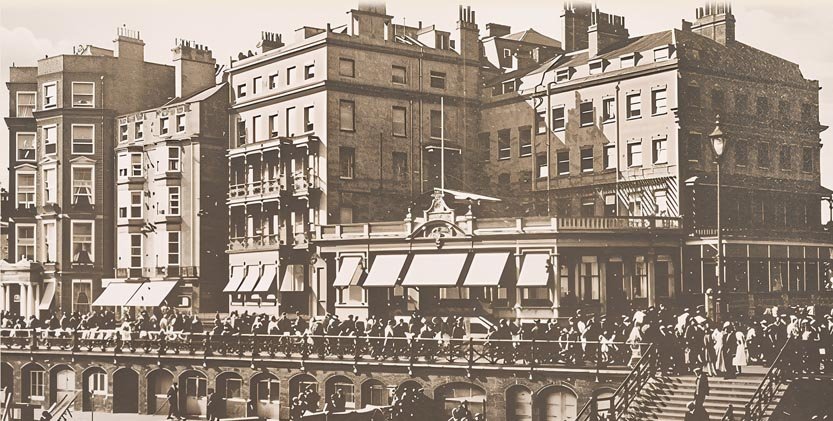
Standing proudly on Brighton’s seafront since 1826, the Royal Albion is one of the city’s most iconic landmarks. Built by entrepreneur John Colbatch and designed by architect Amon Henry Wilds, it was originally constructed to face the Steine gardens rather than the sea, reflecting Regency fashion. Awarded its “Royal” title in 1847, the hotel grew in reputation and welcomed distinguished guests including Oscar Wilde, Arnold Bennett, and Angela Burdett-Coutts. In February 1894, Wilde stayed in a sea-facing room while working on Poems in Prose, adding to the Albion’s literary heritage.
In 1913, hotelier Harry Preston restored the Albion; in 1963 it was joined with neighbouring Lion Mansions. During the 1970s, the adjacent Clive House—once home to Louis Tussaud’s Waxworks—was also incorporated, extending the hotel along the seafront. The building has endured two major fires: a kitchen-ducting fire in 1999 that destroyed the west range, and a second in July 2023 that devastated the western range roof, Clive House and Lion Mansions, which were subsequently demolished.
In 2024, The Bloomsbury Group took charge of the Albion’s future. With planning permissions and designs now underway, a sensitive five-year restoration will transform the site into a new 4-star hotel under the Elite Hotels brand, safeguarding this much-loved landmark for generations. The redevelopment will blend heritage-inspired rooms in historic sections with modern facilities in the newer build, balancing tradition and contemporary comfort on Brighton’s seafront.
Timeline of a Brighton Landmark
Fire History & Investigation
In 1999, a kitchen-ducting fire caused major damage to the original west range. On 15 July 2023, a large fire broke out in the western section, destroying the roof, Clive House and Lion Mansions. Following investigations, East Sussex Fire & Rescue Service reported the most likely cause as a discarded cigarette that ignited a decayed timber window frame, spreading through unseen voids and dry structures. Just months earlier, a September 2022 inspection had praised the hotel’s safety measures and staff preparedness, with minor deficiencies noted.
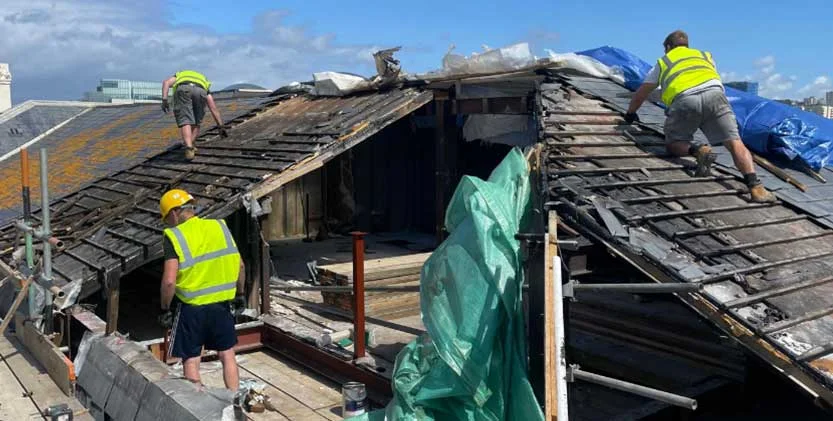
Royal Albion Hotel Project Timeline
Aug 2024 – Now
Mould remediation and strip-out works stabilised the structure after the 2023 fire. A major mould outbreak—spreading via ducting and taking hold on carpets, beds, and plasterboard from the 1999 rebuild—was addressed. Over 500 lorry loads of debris were removed. A like-for-like slate and lead roof was installed on the west range. Original fabric predating 1999 (panelling, ceiling fragments, mouldings) was identified and preserved. The restoration seeks to respectfully reinstate period features lost during earlier refurbishments in the 1920s and 1960s.
-
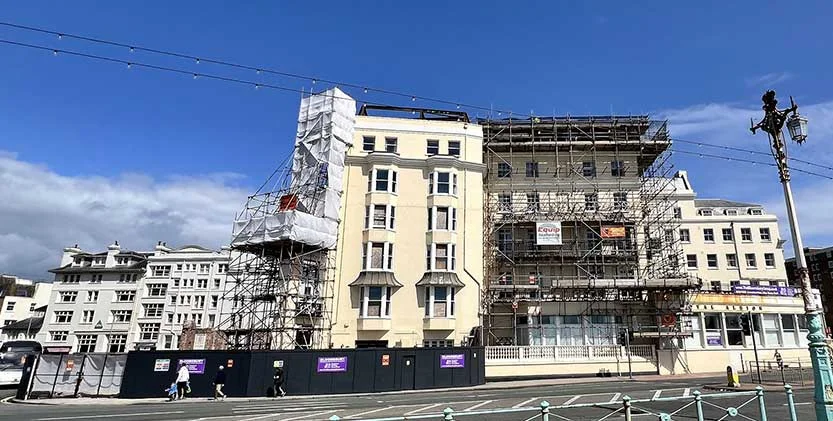 28 February 2025
Initial site works begin
Initial site works begin. Safety measures allow a partial reopening of the A259 ahead of the Brighton Half Marathon. Early preservation ensured the building remained watertight.
-
2 March 2025 Demolition and clearance
Demolition and clearance progress well ahead of Listed Building Consent submission. Thanks to HNW Architects, Lewis & Co Planning, Archaeology South-East, KSD Group, and Garratt Consultants for their contributions.
-
12 March 2025 Title
Text
-
Year Title
Text