

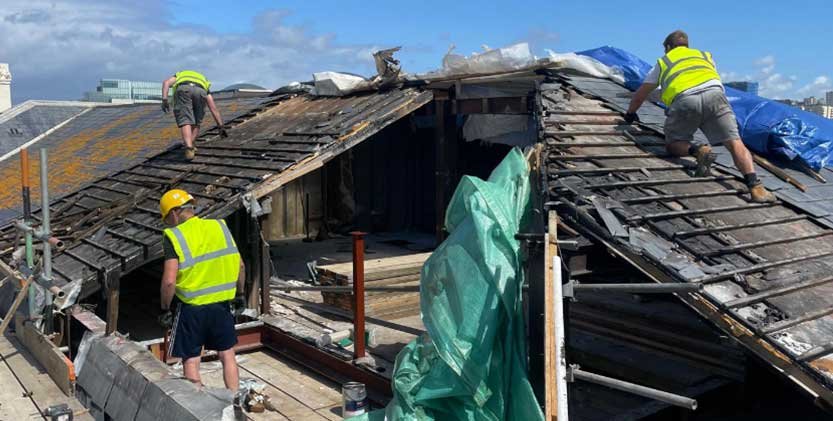
How to Approach a Fire-Damaged Building
At a Glance:
- Immediate Hazard: Structural calcination and hidden “hot spots.”
- Regulatory: Coordination with Fire Investigation Officers and Building Control.
- Preservation: Temporary “Weathering” to prevent secondary water damage during the assessment.
The Initial Assessment: Beyond the Surface
Following a major fire, a building is in its most volatile state. The heat of a fire often exceeds 600°C, which can lead to the calcination of concrete and the loss of structural integrity in steel (which begins to lose strength at 400°C).
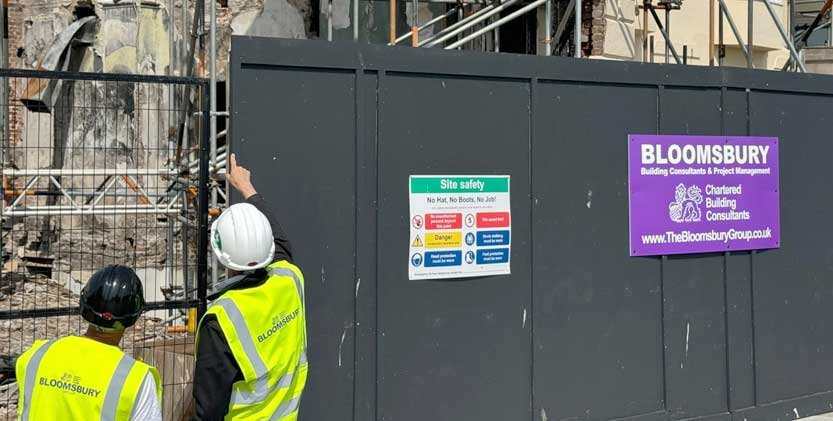
Our initial approach involves a “Safe Access” strategy:
Damping Down & Hot Spots: Confirming with the Fire Brigade that the site is fully extinguished.
Structural “Triage”: Identifying which elements are salvageable and which require immediate controlled demolition or propping.
Environmental Hazards: Assessing the presence of disturbed asbestos or lead paint released during the fire.
The “Weathering” Phase
One of the most common mistakes in fire recovery is focusing solely on the fire damage and ignoring secondary water damage from firefighting efforts.
Temporary Roofing/Shrink Wrap: Protecting the exposed core from rain to prevent timber rot or further masonry degradation.
Controlled Drying: Using industrial desiccant dehumidifiers rather than rapid heat, which can cause “case hardening” and cracking in historic materials.
Forensic Opening Up & Strategy
Before any permanent repair begins, we conduct a forensic “opening up” of the structure. This is where our surveying expertise meets our contracting capability:
Testing Material Integrity: Taking core samples to ensure masonry or concrete hasn’t been “fired” like a brick, becoming brittle.
Smoke Scrutiny: Identifying smoke pathing through voids and service risers, which can compromise the fire safety of sections of the building that appear undamaged.
Liaison with Loss Adjusters: Providing the technical evidence and cost-benefit analysis (Repair vs. Replace) required for insurance settlements.
Navigating Heritage Constraints
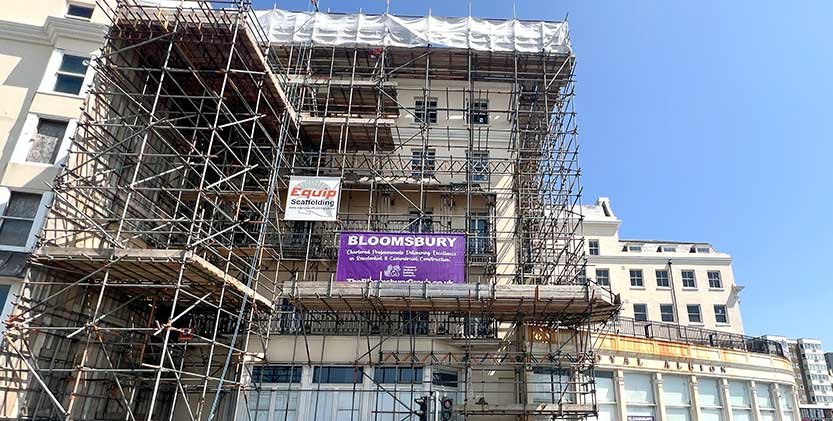
If the fire affects a Listed Building (as seen with the Royal Albion), the approach changes from “clearance” to “salvage.” Every charred timber or fragment of masonry may be a requirement of the Conservation Officer. We implement a “recorded strip-out” process, cataloging what can be restored and what must be replicated like-for-like.
Experience in Action: Our work on the Royal Albion Hotel landmark involved the delicate balance of securing a fire-ravaged Grade II facade while navigating a high-profile public site. Our approach prioritised structural stability and heritage preservation above all else.
View our Structural Stabilisation & Dangerous Structures Page
At The Bloomsbury Group, our CIOB membership is more than just a credential – it’s a reflection of our unwavering commitment to excellence in construction management. We take pride in upholding the high standards set by the CIOB and continuously strive to exceed them in every project we undertake.
Contact The Bloomsbury Group today to discover how our CIOB membership and commitment to professional excellence can benefit your next construction project.