

The Bloomsbury Group
Contact Bloomsbury
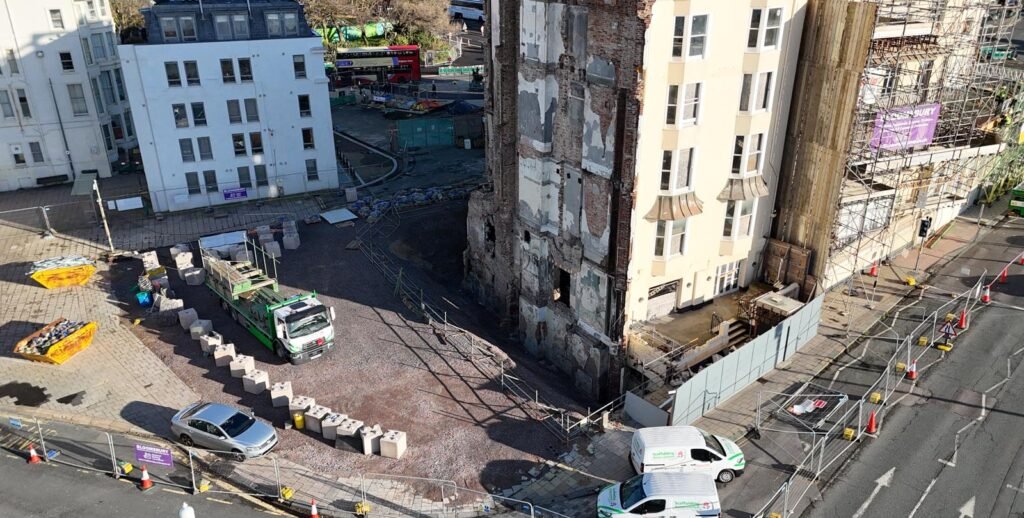
Structural Stabilisation & Dangerous Structures
At a Glance:
- The Objective: To rapidly mitigate immediate life-safety risks and arrest further structural movement in compromised buildings.
- Our Role: Acting as an Emergency Technical Partner for asset owners and authorities, providing both the engineering design and the physical execution of temporary works.
- Core Expertise: Facade retention, emergency propping, needle beaming, and forensic structural investigation.
1. Immediate Response & Public Safety
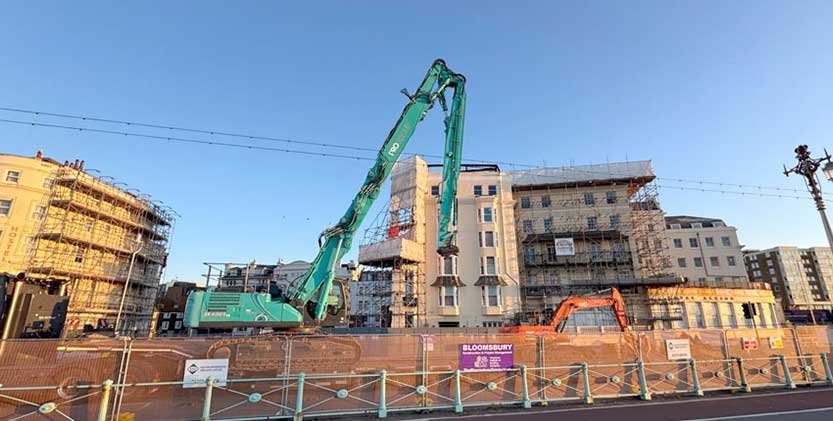
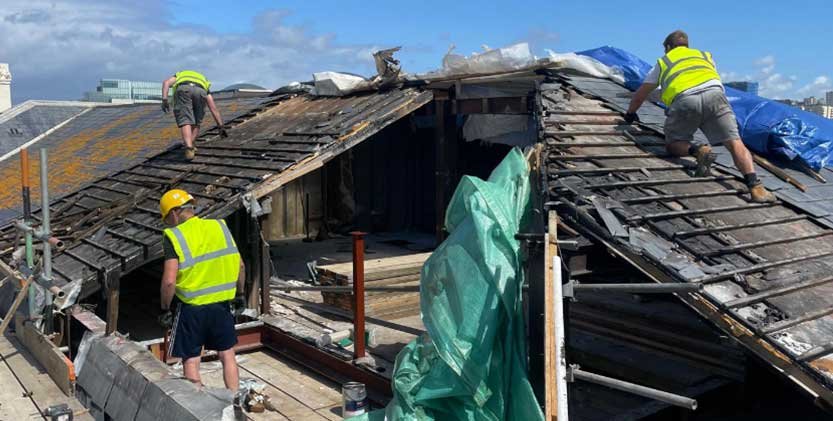
When a building is declared a “Dangerous Structure” under the Building Act 1984, time is the critical factor. We provide a rapid response team capable of securing a site within hours.
Exclusion Zones: Professional installation of high-security hoarding to protect the public and adjacent assets.
Propping & Shoring: Immediate deployment of Acrows, Slimshores, and Megashores to provide vertical and lateral support to failing masonry or concrete.
Utility Safe-to-Work: Liaison with UKPN and SGN to ensure immediate isolation of hazardous services before intrusive work begins.
2. Facade Retention & Historic Preservation
In a city like Brighton, structural failure often occurs in listed Regency or Victorian buildings where the facade must be saved despite internal collapse.
Engineered Retention: We design and install bespoke steel retention frames that act as an “external skeleton,” allowing for internal demolition or reconstruction while preserving the historic streetscape.
Material Sensitivity: Even in emergencies, we use sympathetic fixing methods to ensure that the process of “saving” the building doesn’t cause irreparable damage to fragile masonry.
3. Working with Statutory Authorities
We act as the technical bridge between the client and the regulatory bodies.
Building Control Liaison: We provide the Method Statements and Risk Assessments required by Section 77/78 notices to prove the danger has been neutralized.
Insurance & Loss Adjusters: We provide forensic evidence, including 360° photographic records and structural monitoring data, to assist in the processing of complex insurance claims.
The Knowledge Hub:
Explore our technical white papers on structural crisis management:
4. Forensic Investigation & Repair Strategy
Once the building is stable, the “Emergency” phase ends and the “Recovery” phase begins. We move from being a contractor to a forensic partner:
Opening Up Works: Carefully stripping back finishes to reveal the primary cause of failure (e.g., hidden timber rot, vehicle impact damage, or foundation subsidence).
Monitoring: Installation of digital “Tell-Tale” sensors to track millimetric movement over time, ensuring the building has reached a state of equilibrium before permanent repairs are designed.
Why We Are Different: Most contractors run away from dangerous structures; we run towards them. Our background in Building Surveying gives us the diagnostic skills to understand why a building is failing, while our Principal Contractor status gives us the plant and manpower to stop it. This “Surveyor-led” approach is why we were trusted with the stabilization of the Royal Albion Hotel.
At The Bloomsbury Group, our CIOB membership is more than just a credential – it’s a reflection of our unwavering commitment to excellence in construction management. We take pride in upholding the high standards set by the CIOB and continuously strive to exceed them in every project we undertake.
Contact The Bloomsbury Group today to discover how our CIOB membership and commitment to professional excellence can benefit your next construction project.