

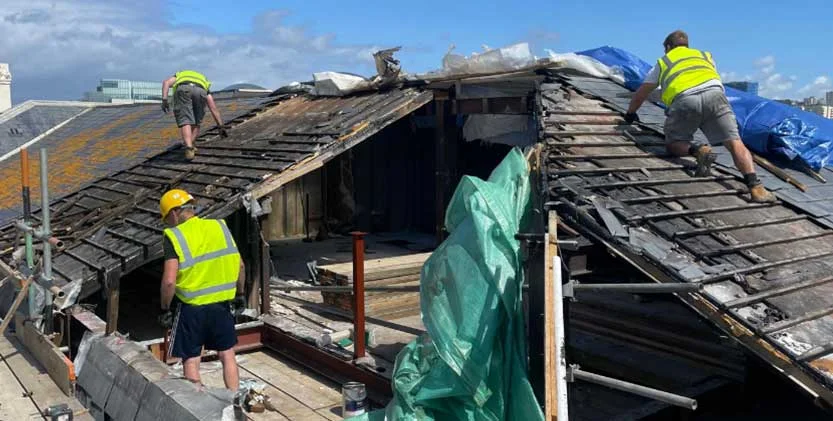
Restoring a fire-damaged heritage building is one of the most challenging tasks within the construction industry. When the building in question sits on a busy public seafront, carries listed status, and holds decades of cultural significance, the complexity increases dramatically.
At The Bloomsbury Group, our experience working on large-scale heritage and refurbishment projects across Sussex has highlighted just how demanding these schemes can become from both a technical and logistical perspective.
Historic hotel restoration is never simply about rebuilding damaged structures. It involves protecting history, ensuring public safety, coordinating specialists, and carefully balancing modern building standards with heritage preservation.
The Challenges Begin Immediately After the Fire
The immediate aftermath of a major fire is often highly unstable.
Before restoration can even be considered, extensive emergency works are usually required to:
- Stabilise unsafe structures
- Prevent further collapse
- Protect the public
- Secure the site
- Remove dangerous debris
- Assess structural integrity
In many cases, fire damage extends far beyond visibly destroyed areas. Heat exposure can weaken steelwork, compromise masonry, damage timber structures, and affect hidden structural elements throughout the building.
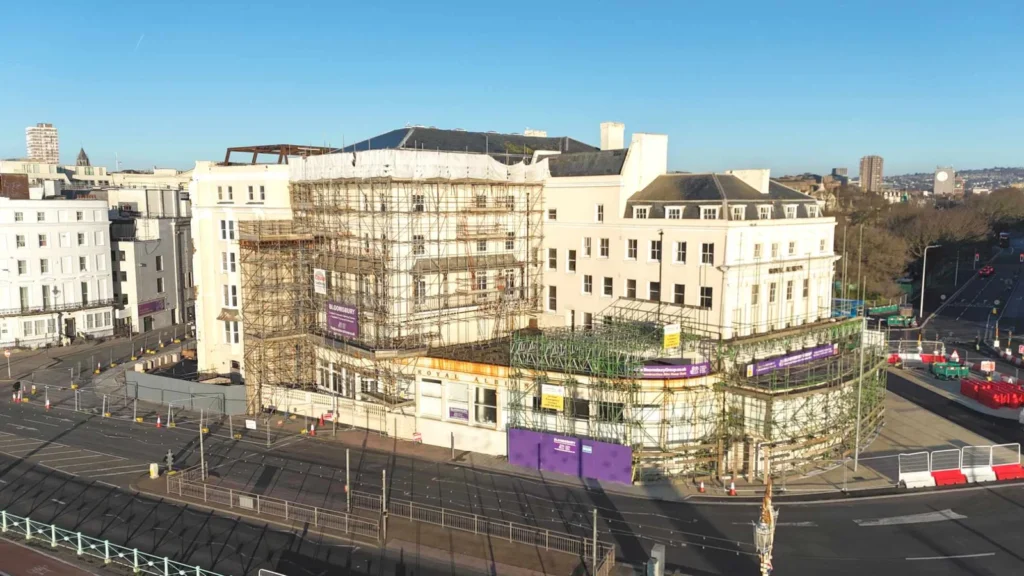
On heritage sites, every decision must also consider conservation requirements and historical significance.
Heritage Buildings Require Specialist Knowledge
Listed and historic buildings cannot simply be repaired using modern construction methods alone.
Many older structures were built using traditional materials and techniques that behave very differently from modern systems.
Common challenges include:
- Matching historic brickwork and stonework
- Preserving architectural detailing
- Working with lime mortars
- Repairing aged timber structures
- Maintaining structural character
- Protecting historically significant features
Conservation officers, structural engineers, surveyors, architects, contractors, and local authorities often need to work closely together throughout the project lifecycle.
This level of coordination requires careful planning and experienced project management.
Public Safety Becomes a Major Priority
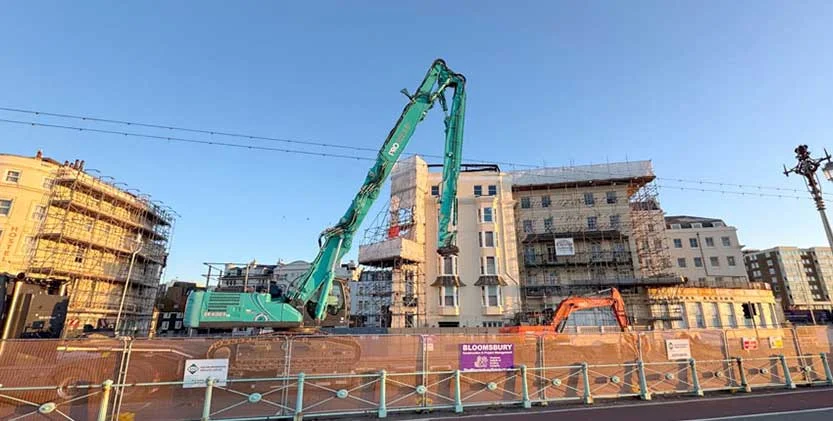
When a damaged building sits within a busy public area, safety management becomes even more critical.
Projects along Brighton seafront, for example, involve constant pedestrian traffic, nearby businesses, tourists, deliveries, and restricted access routes.
Temporary works may include:
- Structural propping
- Scaffold crash decks
- Protective hoarding
- Road closures
- Controlled demolition
- Environmental monitoring
In some situations, works must be carefully phased to minimise disruption while still allowing urgent stabilisation activities to continue safely.
The logistical planning behind these operations is often invisible to the public, but it forms a huge part of successful project delivery.
Modern Compliance Within Historic Structures
One of the biggest challenges in heritage refurbishment is integrating modern compliance standards into older buildings.
Historic hotels often require upgrades relating to:
- Fire compartmentation
- Escape routes
- Accessibility
- Structural strengthening
- Mechanical and electrical systems
- Ventilation
- Energy performance
Achieving this without damaging the character of the building requires careful design coordination and sensitive construction methods.
In many cases, hidden services must be routed through complex existing structures while minimising impact on protected architectural features.
Every Historic Building Holds Surprises
Unlike new-build construction, heritage refurbishment projects rarely proceed exactly as expected.
Once opening-up works begin, previously hidden defects are often discovered, including:
- Structural movement
- Water ingress
- Timber decay
- Historic alterations
- Inadequate repairs
- Hidden voids
- Asbestos-containing materials
These discoveries can affect programme sequencing, budgets, engineering approaches, and safety procedures.
Experienced contractors understand the importance of remaining adaptable while maintaining strict quality and compliance standards.
Restoration Is About More Than Construction
Historic buildings are often deeply connected to local identity and community history.
Restoring them successfully requires an understanding that the project is not purely commercial. These buildings often hold emotional significance for residents, visitors, and local businesses alike.
At The Bloomsbury Group, our approach to heritage projects combines technical construction expertise with careful planning, stakeholder coordination, and long-term thinking.
The goal is not simply to repair what was damaged, but to help preserve important buildings for future generations.
The Value of Experienced Project Teams
Large-scale restoration projects require collaboration across multiple disciplines.
Successful delivery depends on:
- Surveyors
- Structural engineers
- Architects
- Conservation specialists
- Principal contractors
- Temporary works designers
- Health & safety consultants
- Specialist subcontractors
Strong communication between all parties is essential throughout every stage of the works.
Without experienced coordination, delays, compliance issues, and cost overruns can quickly develop.
Protecting the Future of Historic Buildings
Restoration projects represent an opportunity not only to repair damage, but also to improve resilience, safety, and long-term building performance.
With the correct expertise, historic hotels and heritage properties can continue operating safely while preserving the character that makes them unique.
For principal contractors working within this sector, success depends on far more than construction alone. It requires patience, technical understanding, planning, and respect for the building’s history from the very first day onsite.